

Description
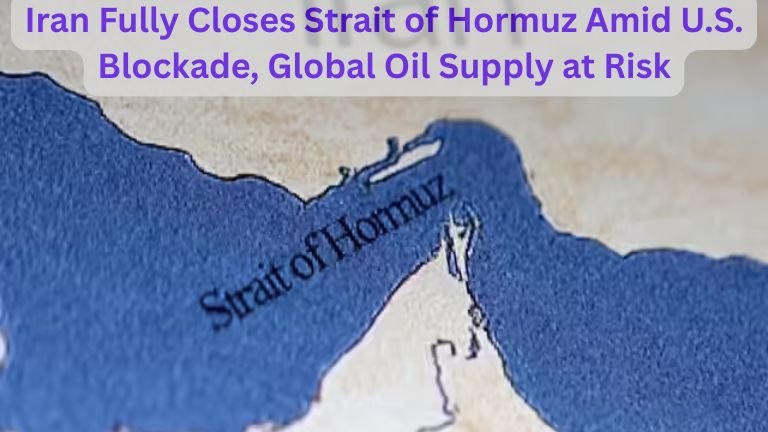
Iran has completely shut down the Strait of Hormuz in response to the U.S. blockade, raising concerns over global oil supply and escalating geopolitical tensions. Full details here.
Tags
Iran News, Strait of Hormuz, US Iran Conflict, Global Oil Crisis, Middle East Tensions, World News 2026, Oil Prices, Donald Trump, Breaking News, International Relations
The global geopolitical situation has taken a serious turn as Iran has once again fully closed the strategically important Strait of Hormuz following escalating tensions with the United States. This move comes as a direct response to the continued U.S. blockade on Iranian ports, further intensifying the already fragile situation in the Middle East.
The development has raised alarm bells across the world, especially among countries dependent on oil imports passing through this crucial maritime route. The Strait of Hormuz is considered one of the most vital oil transit chokepoints globally, and any disruption in its functioning can significantly impact international energy markets.
Iran’s Strong Warning to Ships
Iran’s Revolutionary Guard Navy issued a strict warning stating that no vessel should move from its anchorage in the Persian Gulf or the Sea of Oman. The authorities clearly mentioned that any attempt to approach the Strait of Hormuz would be treated as cooperation with the enemy and could invite direct military action.
This warning has effectively halted all maritime movement in the region, creating a tense and uncertain environment for commercial shipping companies and global trade networks.
According to reports, Iranian forces have already taken aggressive steps to enforce the closure. Gunboats reportedly opened fire on a tanker attempting to navigate the strait, while another container vessel was hit by an unidentified projectile, causing damage to several containers onboard.
Impact on Global Oil Supply
The Strait of Hormuz is responsible for carrying nearly one-fifth of the world’s total oil supply. This makes it a lifeline for many economies, particularly in Asia and Europe. With Iran closing this route, the possibility of a major global energy crisis has increased significantly.
Oil prices, which had briefly stabilised after Iran earlier announced reopening of the strait, are now expected to rise sharply again. Experts believe that prolonged closure could lead to severe disruptions in fuel supply chains, affecting everything from transportation to manufacturing industries worldwide.
Countries like India, China, Japan, and several European nations are closely monitoring the situation, as they heavily rely on oil imports from the Gulf region.
Background of the Conflict
The current crisis is rooted in the ongoing tensions between Iran and the United States. The situation escalated after the U.S. imposed a blockade on Iranian ports, aiming to put pressure on Tehran over its nuclear programme.
The conflict further intensified when military actions were launched earlier this year, leading to a prolonged standoff. The war has now entered its eighth week, with both sides refusing to back down.
Iran has described the U.S. blockade as a violation of international norms and a threat to regional stability. On the other hand, the United States maintains that the blockade will continue until Iran agrees to a comprehensive deal regarding its nuclear activities.
Role of Israel and Regional Dynamics
Israel has also played a significant role in the conflict, having launched initial strikes earlier this year. This has added another layer of complexity to the situation, drawing in multiple stakeholders and increasing the risk of a broader regional war.
The involvement of various groups and nations has made the situation highly volatile, with every development having potential global implications.
India’s Concern Over the Situation
India has expressed deep concern over the recent developments, especially after an India-flagged merchant ship came under fire in the region. The Indian government has taken up the matter with Iranian authorities, highlighting the seriousness of the incident.
Given India’s dependence on oil imports through the Strait of Hormuz, any disruption in this route poses a direct threat to the country’s energy security. Authorities are closely monitoring the situation and exploring alternative arrangements to ensure uninterrupted supply.
Ceasefire Under Threat
A fragile ceasefire currently in place is expected to expire soon, adding to the uncertainty. While there have been attempts to initiate peace talks, the latest developments have cast doubt on the possibility of immediate resolution.
Iran has indicated that it has received new proposals from the United States, but has not shown readiness for direct negotiations at this stage. Officials have stated that the U.S. must first reconsider its aggressive stance before meaningful discussions can take place.
Pakistan’s Mediation Efforts
Pakistan has emerged as a key mediator in the ongoing crisis. The country has been actively working to bridge the gap between Iran and the United States, aiming to bring both parties back to the negotiation table.
Pakistan’s Foreign Minister has confirmed that efforts are underway to organise another round of talks. However, success will depend on the willingness of both nations to compromise and find common ground.
Iran’s Firm Stand
Iran’s leadership has taken a strong and defiant position in the ongoing conflict. The country’s Supreme Leader has stated that the armed forces are fully prepared to defend national interests and respond decisively to any threats.
Iran has also rejected proposals to hand over its enriched uranium stockpile, calling such demands unacceptable. Officials have emphasised that the country will not bow to external pressure and will continue to pursue its strategic objectives.
U.S. Response
The United States has maintained its hardline stance, with President Donald Trump stating that the blockade will remain in place until Iran agrees to a deal. He has also indicated that discussions are ongoing, but has ruled out any compromise on key issues.
The U.S. has reportedly turned back several ships attempting to reach Iranian ports, further tightening its grip on the situation.
Global Economic Impact
The closure of the Strait of Hormuz is likely to have far-reaching economic consequences. Apart from rising oil prices, the situation could disrupt global trade, increase shipping costs, and create uncertainty in financial markets.
Industries dependent on fuel and raw materials transported through this route may face significant challenges, leading to potential slowdown in economic growth.
Shipping and Maritime Challenges
Shipping companies are facing a major dilemma, as the risk of operating in the region has increased sharply. Insurance costs for vessels passing through the Gulf are expected to rise, while some companies may choose to avoid the route altogether.
This could lead to delays in delivery schedules and increased costs for businesses and consumers alike.
Strategic Importance of the Strait
The Strait of Hormuz connects the Persian Gulf with the Arabian Sea and is a critical passage for oil exports from major producers like Saudi Arabia, Iraq, and the United Arab Emirates.
Its strategic location makes it a focal point in global geopolitics, and any disruption here has immediate worldwide implications.
Future Outlook
The situation remains highly uncertain, with multiple factors influencing the outcome. The possibility of further escalation cannot be ruled out, especially if diplomatic efforts fail.
At the same time, there is hope that international pressure and mediation efforts could lead to a peaceful resolution. Much will depend on the decisions taken by both Iran and the United States in the coming days.
Conclusion
The closure of the Strait of Hormuz by Iran marks a significant escalation in the ongoing conflict with the United States. With global oil supply at stake and tensions running high, the world is closely watching how the situation unfolds.
For now, the focus remains on diplomatic efforts to de-escalate the crisis and restore normalcy in one of the most critical regions for global trade and energy supply.